
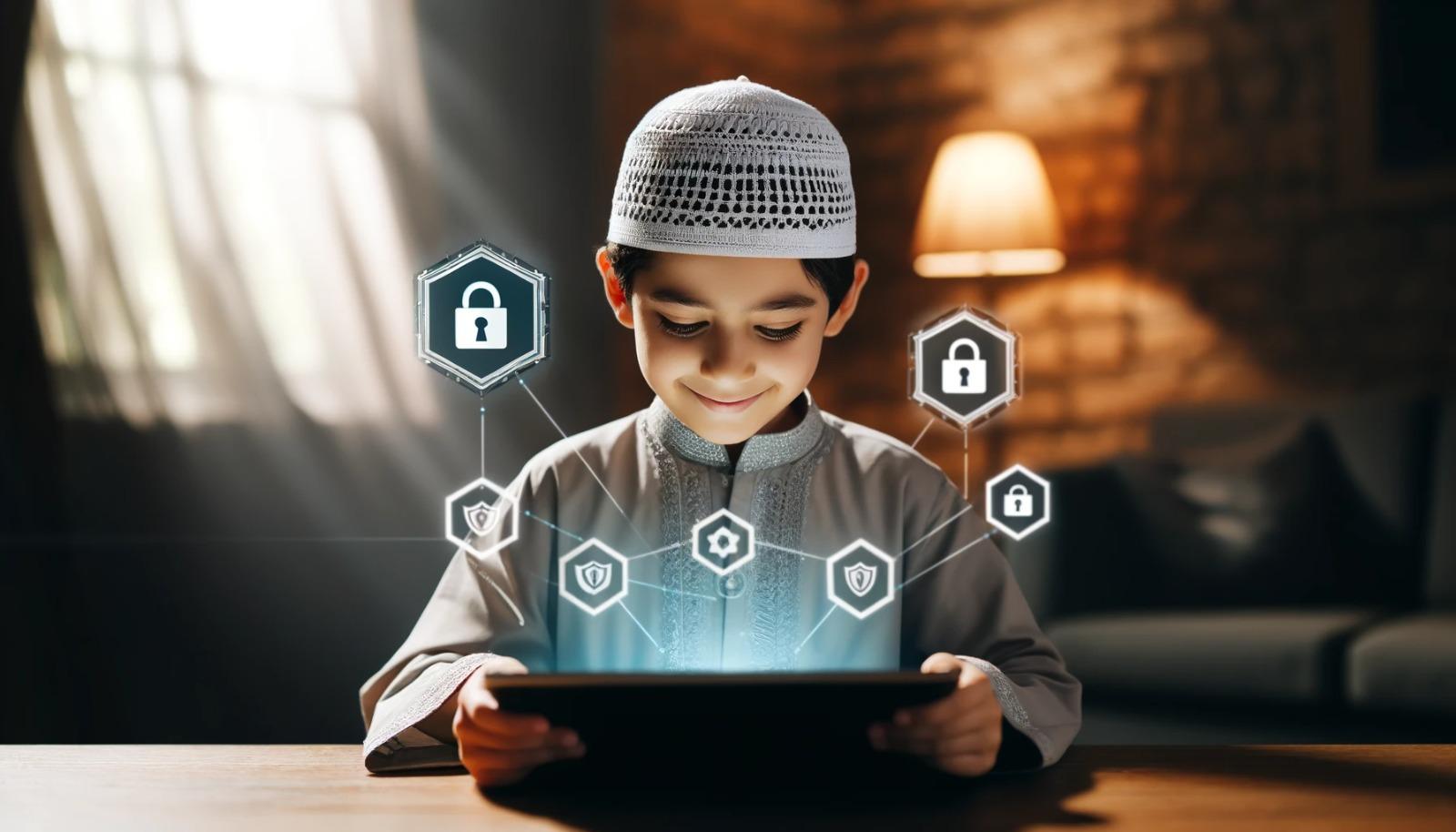
Want to keep your kids safe online? We can help!
We’ll show you how to monitor their activity, block harmful websites and teach them good online habits. An Islamic-guided safe approach will play an instrumental role in ensuring responsible internet use among your children. Let’s drive in.
Top 5 Tips for Parents to Keep Their Child Safe Online
Kids use the internet for school, games and chatting. On the other hand, it also offers such risks as improper content, harmful people, cyberbullying and threats against privacy. Parents are anxious about how to save their children from these threats. Some of the more common questions parents ask when thinking about how to protect their children online include:
1. Should I take away the Internet from my child?
2. How do I protect my child online?
3. What tools can help in protecting my child online?
4. How can I protect my child’s privacy and information?
5. How do I block my child from accessing something disturbing online?
Now, the parents are responsible for keeping our kids safe online. That is where Kahf Kids or such platforms come in: helping kids spend time online safely. We will discuss why online safety amongst kids is important and how it will assist.
1. I shouldn’t let my child use the Internet, right?
Instead of keeping your child offline, let Kahf Kids help you teach them online safety. You can set rules together, helping them understand what’s safe and what’s not. This way, kids can explore the Internet while learning to stay safe, making the experience enjoyable and secure.
2. How can I keep my child safe online?
Kahf Kids offers great tips for parents to teach their children online safety. One key focus is to avoid sharing personal information and recognize bad behavior. Fun lessons and videos make learning about online safety easy and engaging for kids.
3. What online safety tools are available?
Kahf Kids is among the safety tools that are easy to use online, enabling you to monitor what your child does on the Internet. They also have easy guides about setting up those tools. This will make life easier for you when trying to protect your child.
4. How can I help my child with privacy and data protection?
Kahf Kids explains to them in the most simplified way the importance of privacy. They offer tips on creating strong passwords and adjusting privacy settings on social media to protect personal information.
5. What does my child do if they see something online that upsets them?
Kahf Kids encourages children to tell their parents if they see anything bad online and offers simple tips on how to discuss it. Finally, you can find help contacts and resources through it so your child knows where to go to get assistance.
2023 Child Online Safety Index
The 2023 Child Online Safety Index (COSI) guides in following through with how safe the various countries’ children are online. This gives the government an update on the main indicators to monitor and advance online safety among the young.

The Child Online Safety Index presents this chart about the persistent cyber pandemic. The number below includes the percentage of children aged 8–18 who have faced at least one cyber risk.
This graph highlights the disturbing problem of so many kids and teenagers in such a predicament online. Since 2017, most kids have reported having at least one bad experience online, and that’s a major issue.
In 2023, 67% of people said that children face online dangers. In 2022, it was around 73%. This underscores the necessity of safeguarding youth online.
The large number shows that we need to teach kids more about staying safe online. Conversely, we take measures to protect young people from harmful online content. Ensuring the cultivation of safe and responsible internet usage among children is of utmost importance.
A Safer Internet for Kids: How We Can Work Together

Imagine a world where kids have the freedom to roam the internet securely. This plan focuses on six key areas that need to work together for a safer online experience for children:
1. Teaching Kids to Be Smart Online:
Schools have a significant role in educating children on the safe use of the Internet. The more we teach them about being responsible online, the better choices they will make.
2. Family Support:
Parents are the first line of defense. The guidelines set by them and open discussions about the risks online help to make the digital environment at home a little safer.
3. Learning Online Safety in Schools:
By teaching kids how to access the internet safely, they will learn to make smart choices while browsing.
4. Technology Companies:
The Buck Stops There: Technology companies design their products for kids; they should take seriously the issue of child safety. Safer tools and platforms can greatly reduce risks.
5. Government Protection:
Laws can enhance online safety for children by blocking harmful content and preventing issues such as cyberbullying.
6. Better Technology:
Technology should be safe, with secure internet and tools that protect kids online. Families, schools, tech companies, and governments can work together to make the internet a safer place for kids.
Child Protection in Cyberspace (CPC) Global Summit 2024
The CPC Global Summit 2024 will be held on October 2-3 in Riyadh, bringing together leaders and groups like UNICEF and WeProtect. They will focus on protecting kids from online dangers, tackling new cyber risks, and making the internet safer. The summit will also explore ways to support education, gender equality, and peace.
Click here for more information.
Child Online Protection (COP)
Ensuring the safety of children online is a significant challenge that requires a collaborative effort from everyone. Countries worldwide need to help each other keep kids safe while they use the internet. The COP initiative raises awareness and supports countries in establishing safety frameworks. Tools like Kahf provide user-friendly solutions for parents to monitor their children’s online activities, ensuring they have positive and safe online experiences.
For further information log on to: ITU Child Online Protection
Child Sexual Abuse Material (CSAM)
The internet is a tool that can be used for both positive and negative purposes. We need to be careful about the bad stuff, especially child pornography. Protecting children from such dangers is vital, and Islam teaches us that safeguarding our youth is a duty.
To tackle this issue, we need to understand how people engage with harmful content—whether they create, view, or share it. Kahf helps parents block harmful content, keeping kids safe online and aligned with their values.
See WeProtect for more.